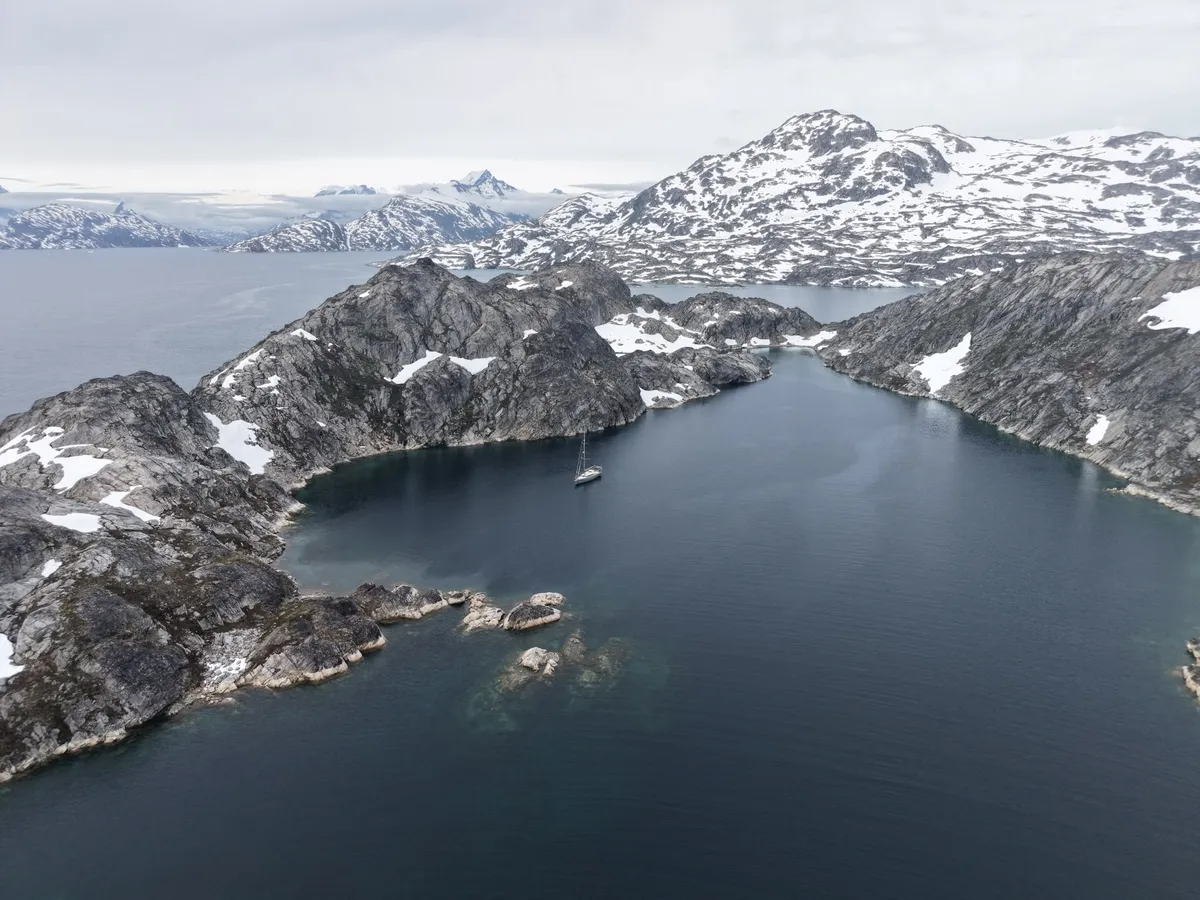
False start.
| Passage | Hafnafjörður → Hafnafjörður |
| Distance | 375 nm (10 nm under engine) |
| Duration | 74 h (2 h of engine) |
| Wind |
B0
B2
B4
B6
B8
B10
Calm
Storm
|
| Comfort |
☁️
💨
😊
😩
😤
☀️
😞
|
Four days at sea and we're back.
Same marina. Same pontoon. Same berth.
We had left with a travel companion, Endeavour, greeted by our new pontoon friends. A strong wind pushed us towards Greenland for the first 24hrs.
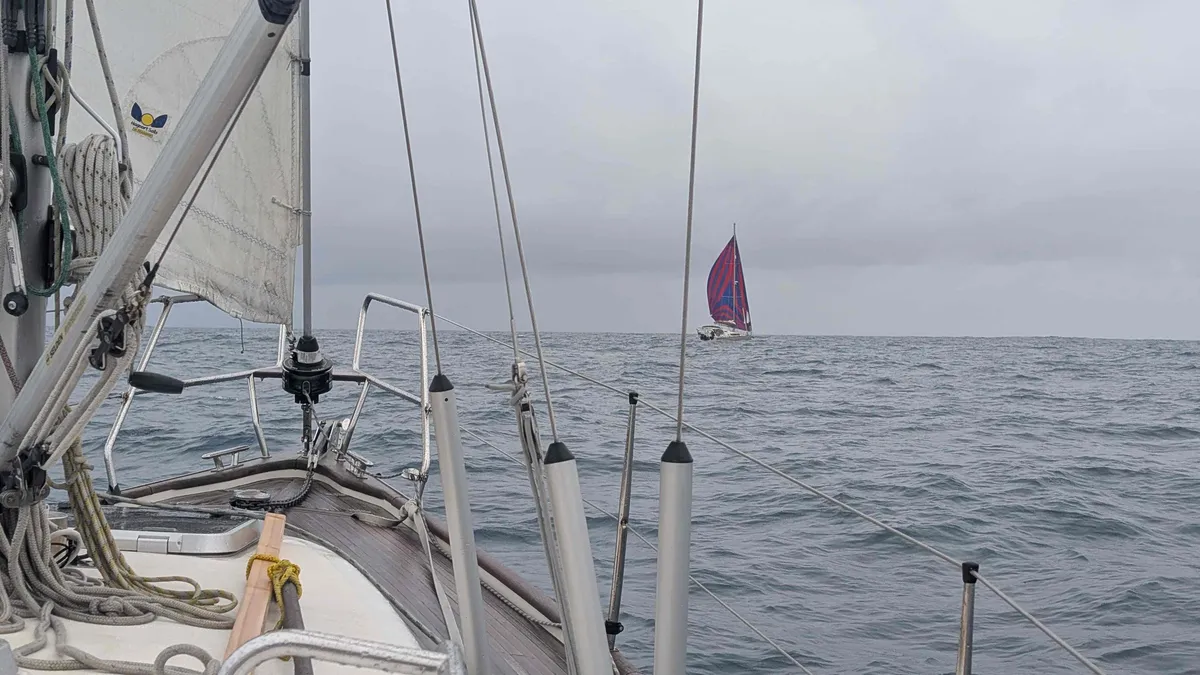
Day 2 at sea
The wind dies.
We start the engine and continue our progress.
For 30 minutes.
Suddenly, the engine slows down on its own, starts billowing white smoke, and stops.
As this has happened before, we immediately suspect an issue with the water-cooling system.
Day 3 - 1am
We’ve checked the water strainer and the impeller, they’re fine.
We contact Endeavour for advice, consult the internet. It might be water in the fuel. The fuel-water separator confirms our suspicion.
Day 3 - 3am
The whole boat smells of fuel, we both have terrible headaches and struggle to keep our eyes open, but we have drained most of the water from the fuel filters and tank. We’ll consider later why the water was there.
We try to restart the engine. Success! It coughs a bit, puffs some white smoke, and gets going.
We turn Capsula back towards Greenland and re-start our journey.
For thirty seconds.
Capsula barely starts moving before the engine stops again. And categorically refuses to restart.
Really?
Well, at least we are not in an ice field and the sea around us is still calm.
We take a deep breath, resist the temptation of just going to bed, and check the engine again.
We had left the bleeding valve of the fuel filter open. So, when starting the engine, air got sucked in and now our whole fuel system is full of air instead of diesel.
I wish engines would run on air.
Day 3 - 4am
We start bleeding the air from the fuel system, something notoriously difficult in this kind of engine with a weak fuel pump.
We follow the procedure learned from observing mechanics:
Fill the filters.
Crack open one injector.
Crank the engine.
Fuel should come.
Nothing. (that was not in the procedure)
Repeat. Again. And again.
Day 3 - 5am
We've exhausted our ideas, our energy, and our starter battery.
Entering the iceberg alley without the confidence of having a functioning engine is out of the question.
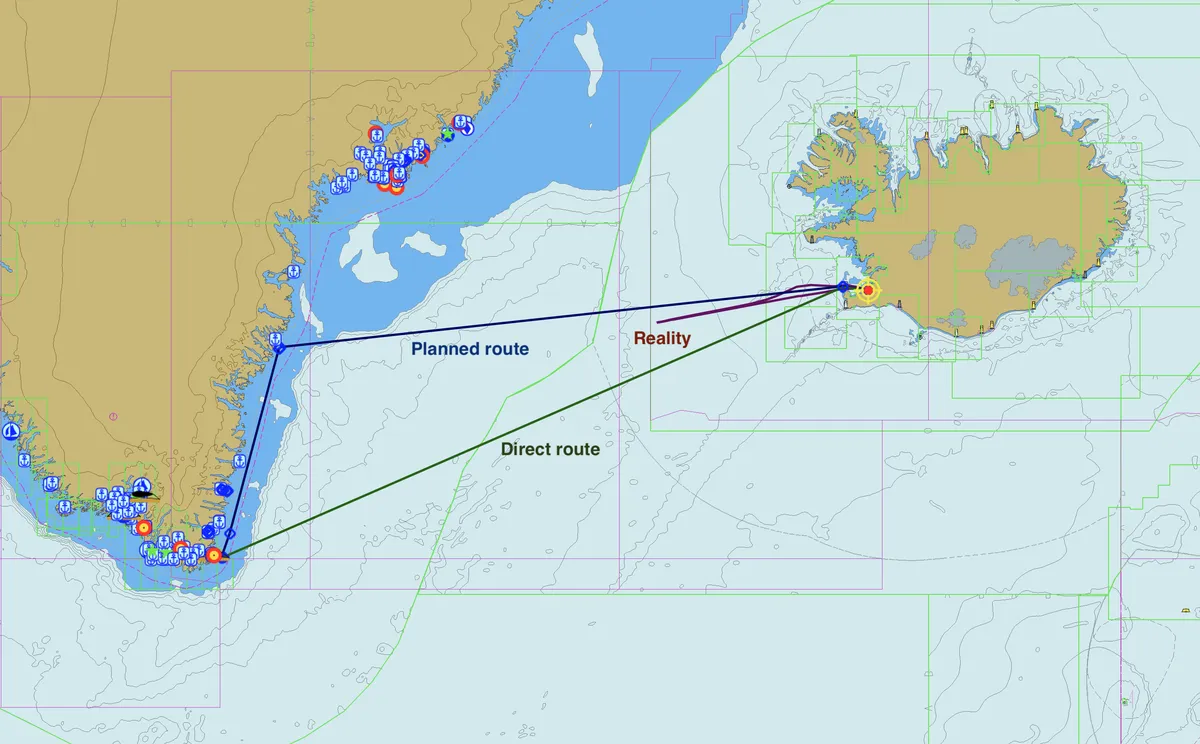
La mort dans l’âme, we turn Capsula back towards Reykjavik.
Day 3 – 5pm - 100nm from Reykjavik
Boosted by a few hours of sleep, and a coffee, we start trawling the internet again in search of a solution.
Someone suggests opening the three injectors at the same time to help the air escape.
The solar panels have partially recharged the starter battery. We’ve nothing else to do and nothing to lose; why not give it a try.
We open all three injectors.
Turn the key.
Nothing.
We keep trying, stubbornly (or desperately).
And suddenly, a drop. Fuel appears.
One by one, fuel reaches the injectors.
Valiantly, the engine keeps chugging, struggling, until it finally settles into a normal idle.
We’ve made it!
And now, do we keep going to Reykjavik and make sure that all is fine? Or turn back to Greenland to take advantage of the weather window and stay in touch with our travel companions?
We check the forecast. A severe weather front is coming, but we might be able to outrun it. Or not.
Despite everything in us wanting to keep going, we decide on the safe option. Reykjavik it is.
At least the weather is ideal, and the sail would have been bliss, had we been heading to Greenland.
Day 4 - midday
Back in Reykjavik, we’re happy to enter the port under our own power, instead of being towed, and are warmed by the friendly welcome of fellow sailors, who had also been supporting us via messaging on our way back.
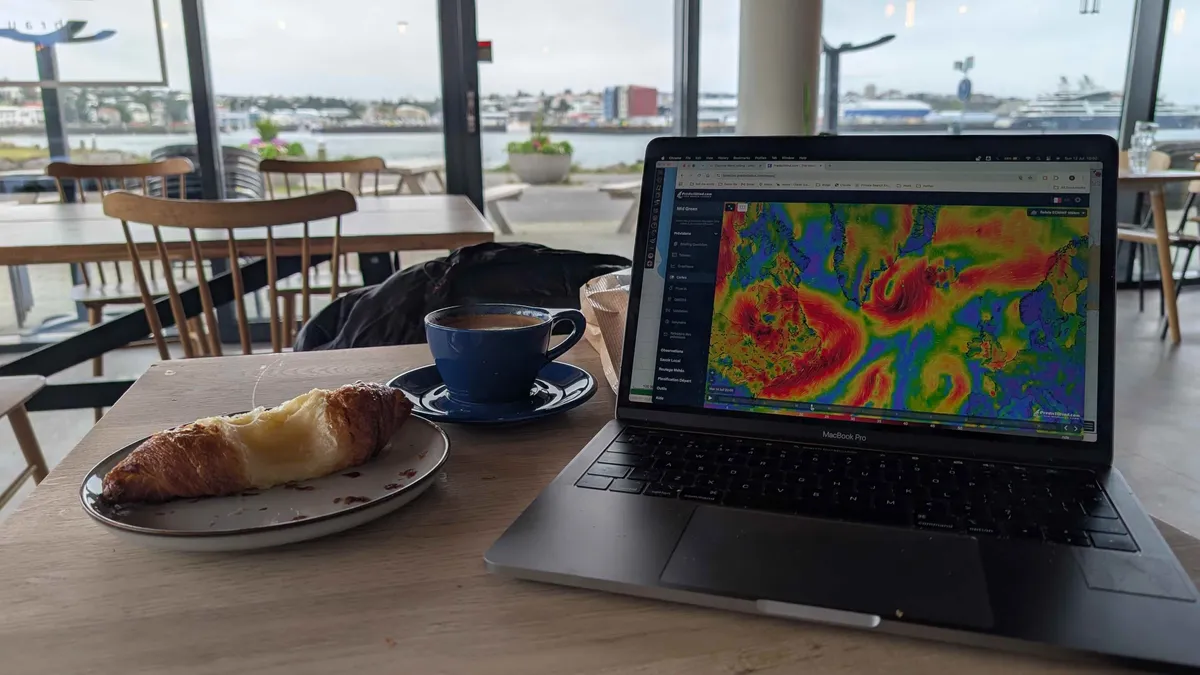
We've been checking every forecast update since our return to the pontoon, watching weather windows disappear one after another, while photos from Greenland keep arriving on our phones.
We know it was the right call. It doesn't feel like one.