Motor cruising across the Labrador strait
| Passage | Qaqortoq → Cartwright |
| Distance | 576 nm (190 nm under engine) |
| Duration | 5 days and 7 h (44 h of engine) |
| Wind |
B0
B2
B4
B6
B8
B10
Calm
Storm
|
| Comfort |
🌫️
🥱
🐋
🐦
🌅
🙂
|
44 hours motoring.
This was the first long crossing of its type for us.
Our usual crossing is more Capsula bashing the waves and us trying to decide between putting 2 of 3 reefs to our sails while managing sea sickness and worrying about the next potential gale force wind (see crossing to Greenland).
This time, none of this. We had the occasional nice breezes from the beam, making for an ideal sailing across the Labrador strait. But this lasted only a few hours.
Most of the time, the sea was perfectly still and after hours of sails flapping, we were resolving to start the engine.
This is usually the trigger of long arguments. To the point that we have now agreed to define a set of rules related to when to start it or not. Rationally, it does not make sense: we carry an engine, we should use it to make progress when the wind is letting us down. But there is some inelegance in starting the engine. The noise and vibrations from the engine come to disturb the complete stillness of our surroundings. And it feels like a failure: we did not pick the right weather window and we did not patiently wait for the wind to return. In this specific case, came on top the worry of not having enough fuel to cross (our tank is only 90L). We even refuelled on the go. Emptying one jerrican of fuel into our tank in the middle of the ocean was a new experience to us.
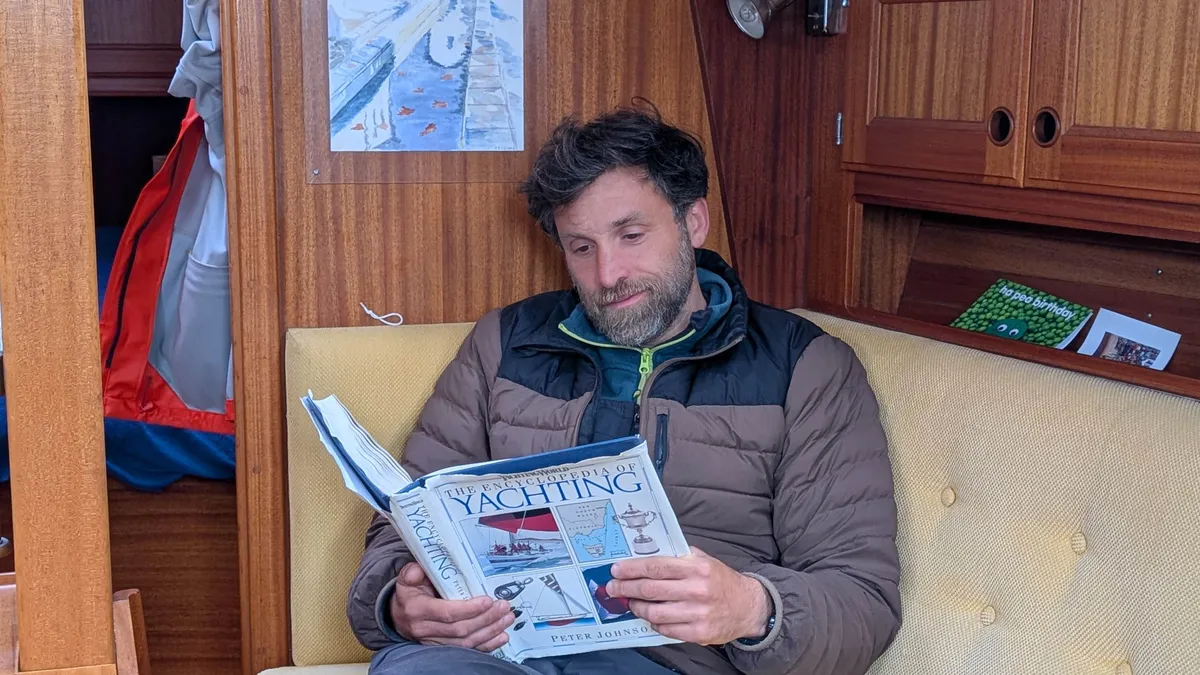
On the bright side, no seasickness, no fear, and the ability to cook, work (Stefano took a call right in the middle of the crossing) and even, though rarely, read.
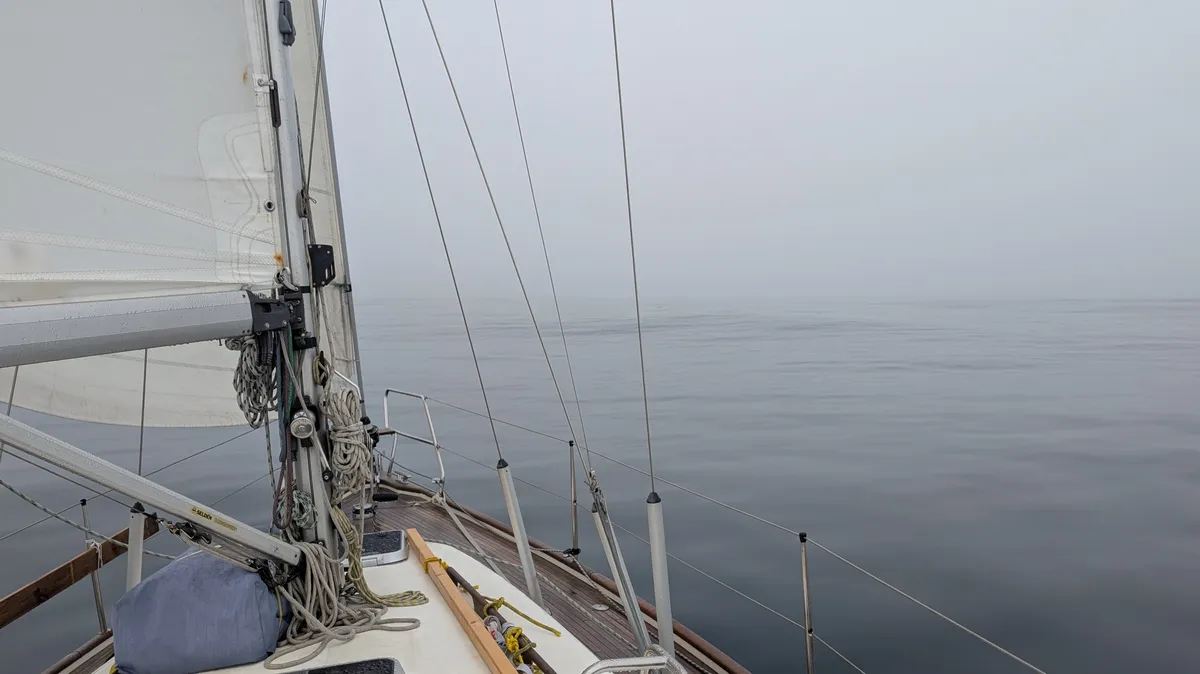
The fog that enveloped us most of the crossing created an ethereal atmosphere. As if the world beyond Capsula had vanished. Pilot whales and dolphins came swimming alongside. At night, plankton was transforming our wakes into fluorescent green foam. We could hear some squeaking around Capsula. We initially thought something was lacking grease. But we soon realised the noise was coming from little birds, storm petrels, attracted by our sailing lights.
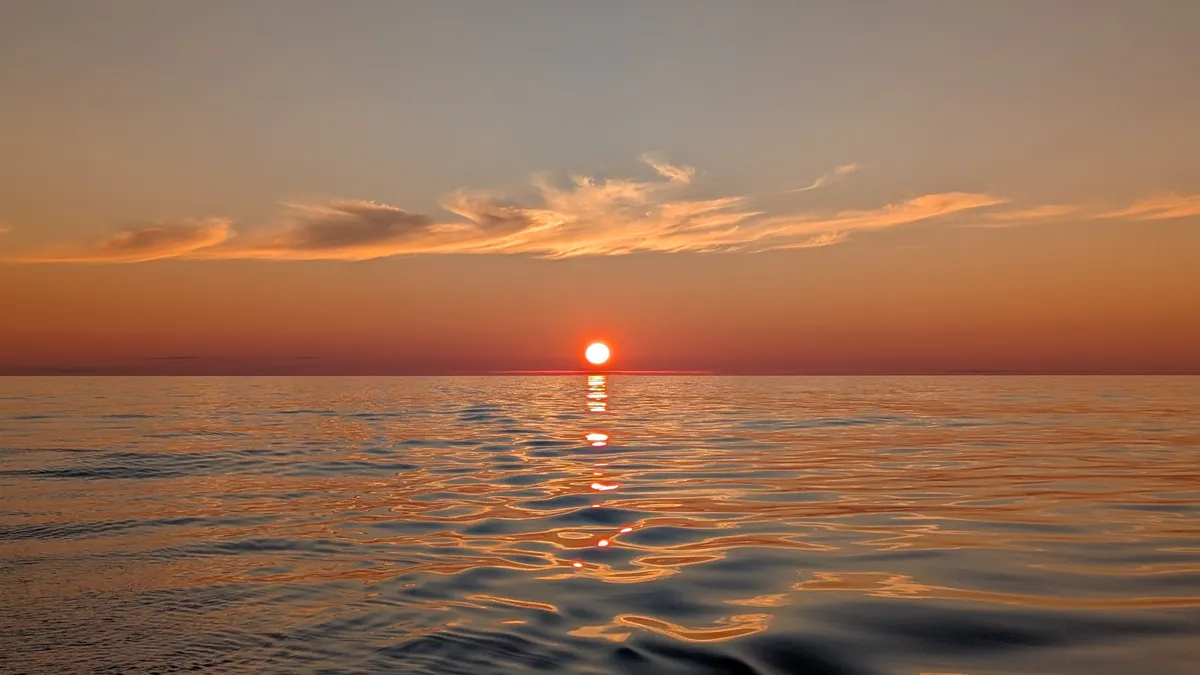
On arrival on the Labrador coast, after a few hours of nice breeze, the wind came to a still. The fog lifted, offering us the first sunrise of our crossing. The sea was like a mirror. We could even see the reflection of the birds in the water. Because they were back, the birds. We saw hardly any of them in Greenland, which had been a surprise for us [ref post about Greenland]. But approaching the appropriately named Gannets Islands, we saw (and smelled) them all again: fulmars, gulls, gannets, guillemots and puffins. The coast was greener. Life was back again.
We made landfall in Cartwright. Though landfall is not the appropriate word as we had to stay on board until custom officers, who had travelled along the coast for hours to check in other boats arriving from Greenland, finally came to us and officially welcomed us to Canada. They kept apologising about having made us wait. The first of a long series of friendly encounters in Labrador and Newfoundland.
Anne, Newfoundland, August 2026