Sailing Newfoundland and Labrador: rides, cloudberries and cod
August 2026
The tension of four weeks of Arctic sailing lifted when we arrived in Labrador: no more ice, accurate charts, multiple anchoring options and weatherproof harbours with solid quays.
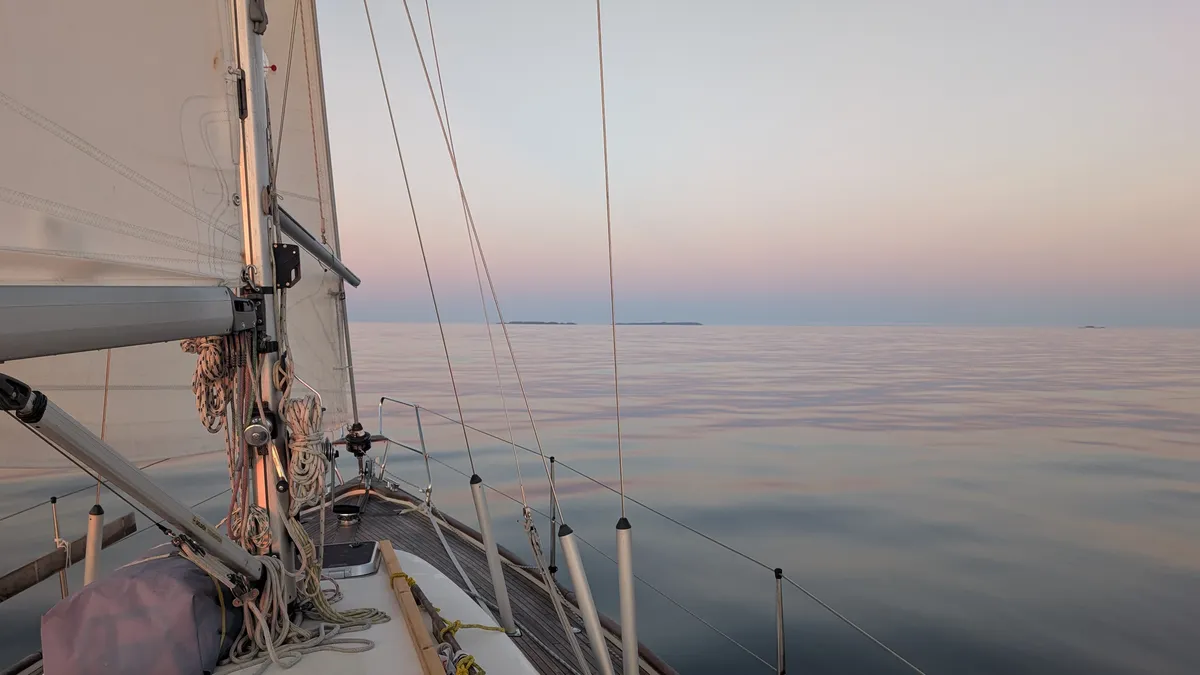
We had time to digest the transition, though. After a five-day crossing from Greenland in almost no wind, we had to wait another five hours on board in Cartwright before the customs officers finally arrived to clear us into Canada. A reminder that while less icy, Labrador is also remote. The officers had been driving all day from harbour to harbour to check in a handful of boats arriving from Greenland. They came to us at 9pm, had a two hours' drive ahead of them to go back to their hometown, but were still among the nicest customs officers we’ve met. They even managed to apologize profusely for having made us wait for them.
The next day, we got offered a ride to fill up our water jerricans, a car tour of the village, another ride to fill up our fuel jerrican and finally, as we were asking if there were public showers, to use the shower at someone’s place. A French sailor, who rafted up alongside Capsula, asked where he could buy seal meat. An hour later, the person he asked came back with a freshly cooked seal stew and refused any kind of payment.
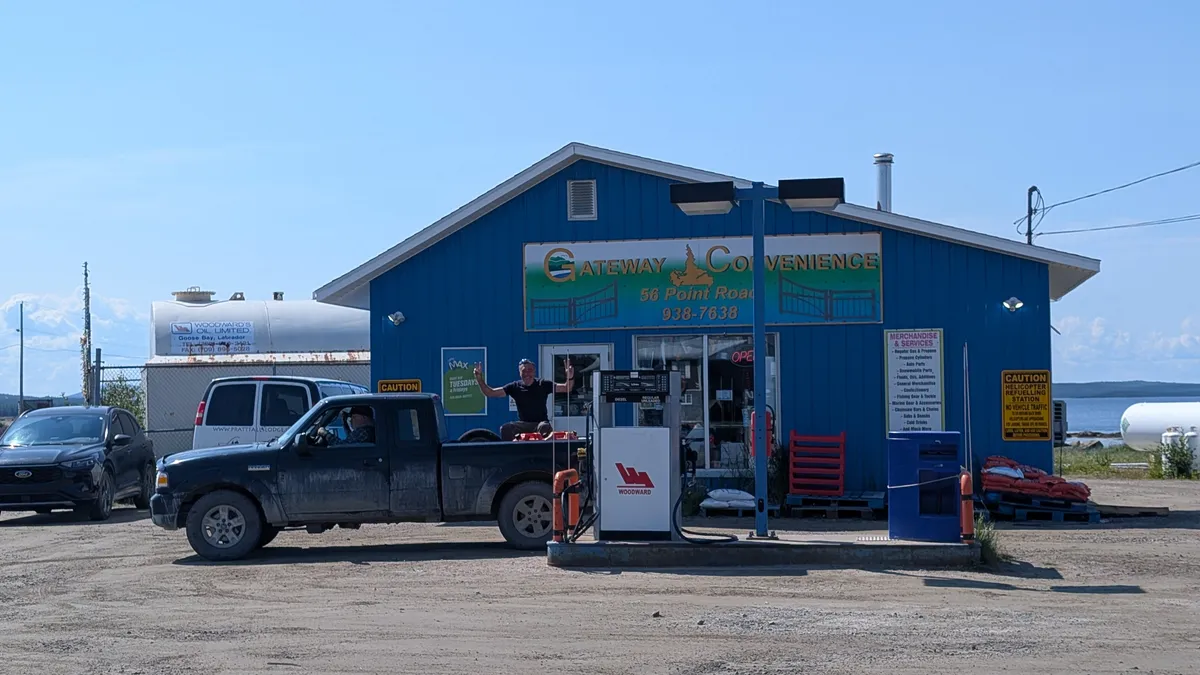
The same gestures kept happening throughout our time in Newfoundland and Labrador: gifts of fresh fish, offers to take us to the supermarket or even to lend us a car. Other travellers told us similar stories. It made us wonder what stops us from doing the same at home.
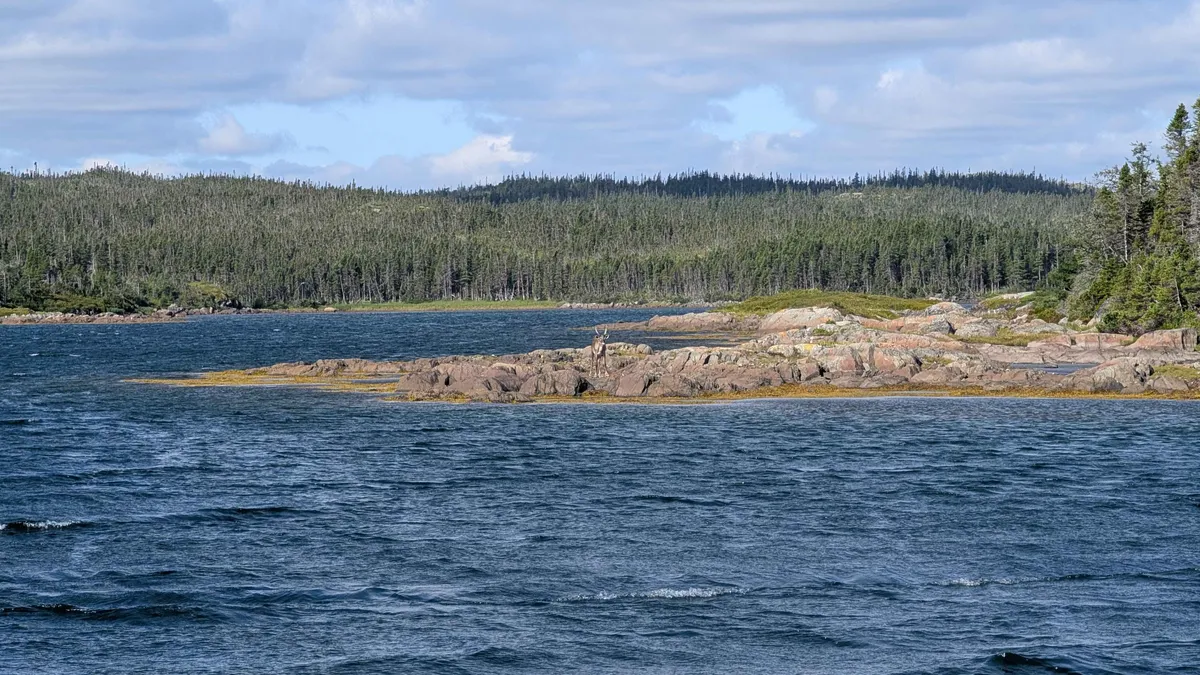
Our journey took us down the coast of south Labrador for a few days. Then across the Strait of Belle Isle to Newfoundland, sailing its north, east and south coasts for a bit more than a month, before crossing to Nova Scotia. We enjoyed the wilderness of remote anchorages, with caribou (or moose) as our only neighbours, knowing that a safer anchorage, or a pier in a fishing harbour, sometimes an abandoned one, was always within reach. Food, fuel and water stocks became less of a concern, at first sight. Surprisingly, getting drinkable water proved more challenging than in Greenland. Most harbours had water on the quay, but often running too brown to be trusted. When asking locals if we could drink it, answers were often “I would not”.
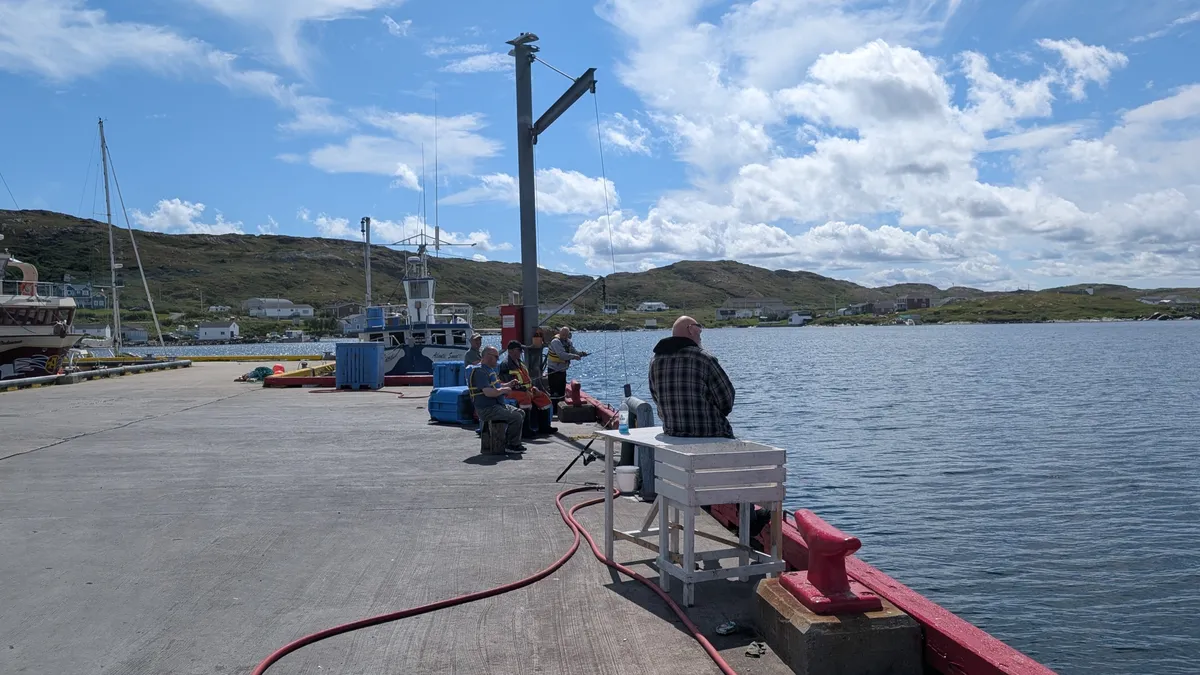
We fished for mackerel, which seemed to be a local sport at that time of year. In almost all harbours we found people of all ages fishing from the pier. For some, it was literally sport fishing: “I don’t like mackerel” a guy told us, before offering to give us all his catch. We do like mackerel! So we asked how to catch them. The answer came with a smile: “throw them whatever, they will catch it”. We threw a bait that we had acquired in Cartwright (“best bait for trout” a kid had told us) and in less than 15 minutes, we had enough mackerel to feed us for a few days.
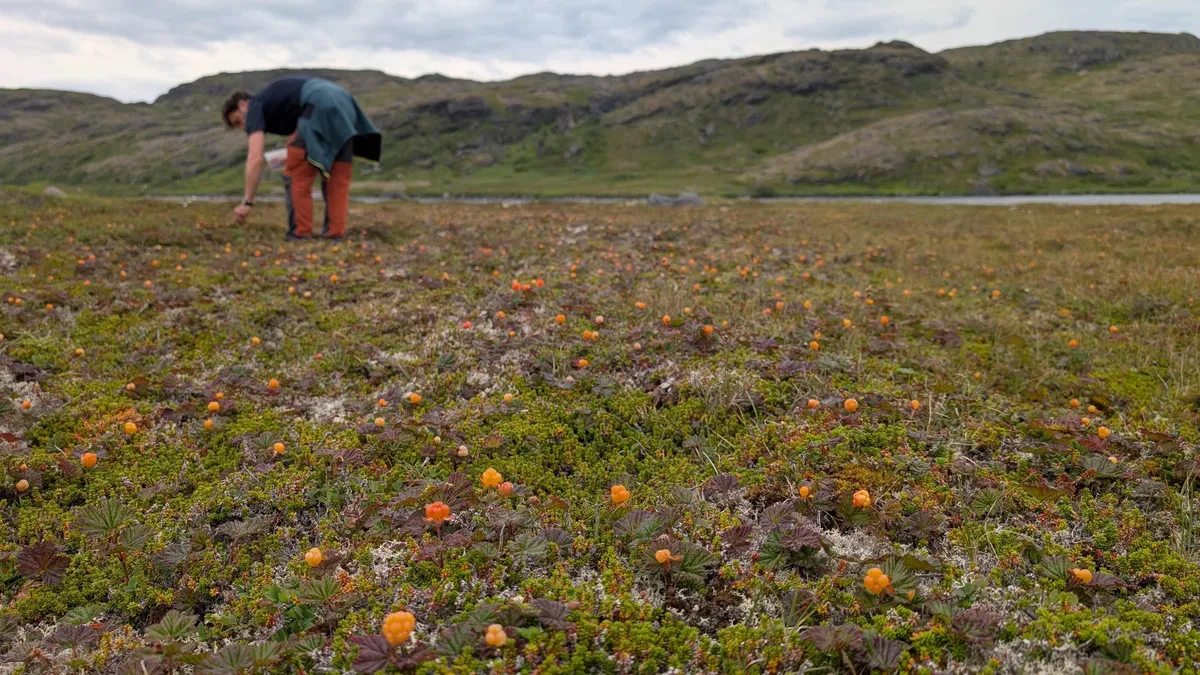
We picked cloudberries (or bakeapples, as they call them there). A completely new taste for us, something that is becoming a rare thing these days. We found them at almost every anchorage in Labrador and up to northern Newfoundland: carpets of orange dots on a green background, fiercely defended by clouds of mosquitoes. We filled box after box, learned to make preserves, and boosted our breakfasts with their bittersweet taste. Further South, cloudberries gave space to blueberries. The fields turned blue, and so did our breakfasts and jams.
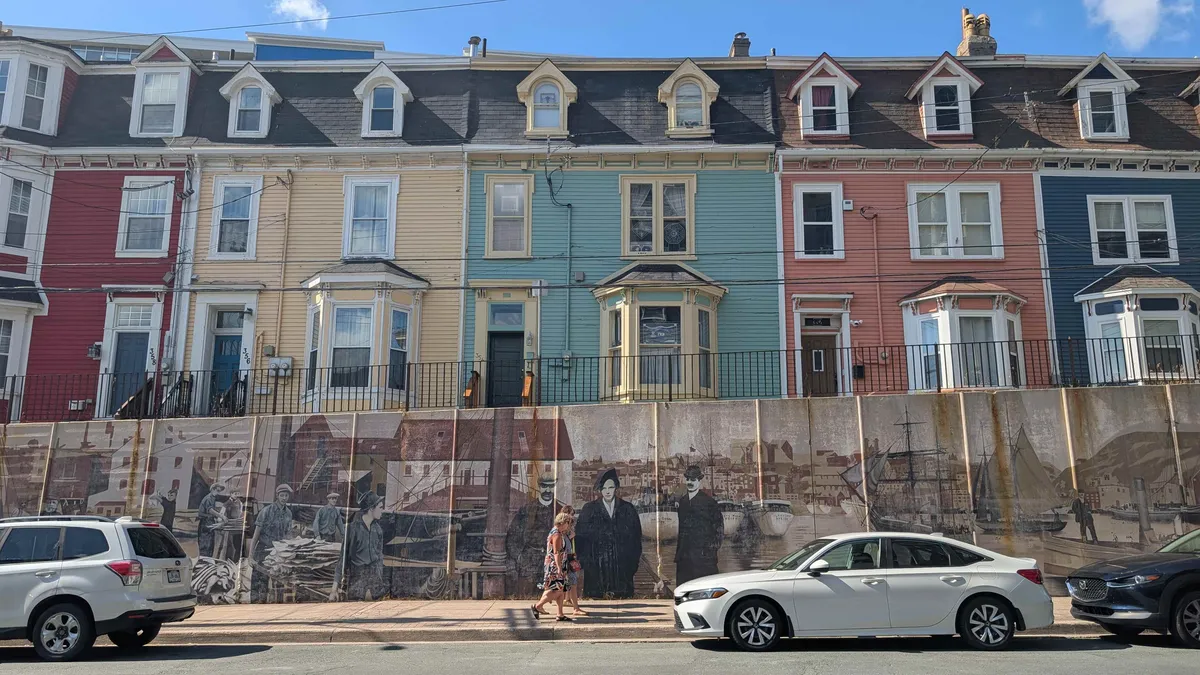
Heading east, we reached larger towns. Bonavista was a milestone: it is where Giovanni Caboto (John Cabot, as the British call him) is supposed to have made landfall when he “discovered” Newfoundland. He sailed from Bristol, where Stefano studied for years with a replica of the Matthew in sight. The Norse got there first, though: the settlement we visited at L’Anse aux Meadows is about a thousand years old, and Indigenous peoples had lived here for thousands of years before them.
St. John’s, the capital, is a cute city, and it felt good to be in a proper town again: shops, restaurants, bars, bakeries, farmers’ markets. Our berth, however, was in the industrial harbour, which made for constant noise.
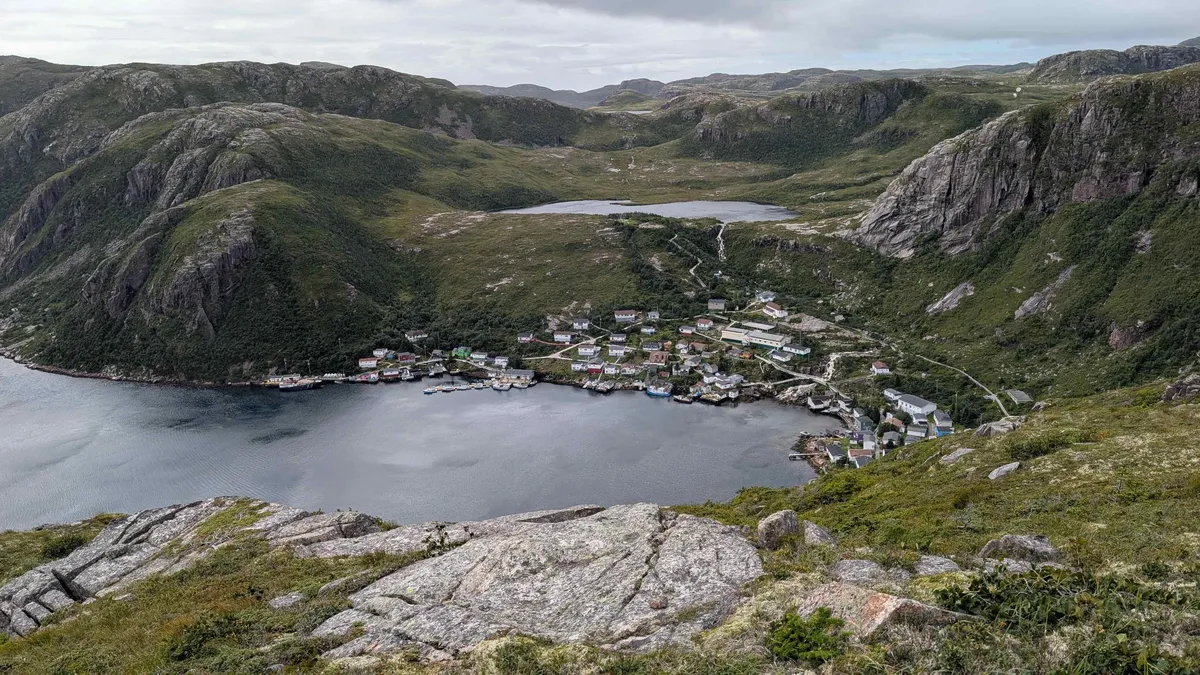
On the south coast we stopped in villages as isolated as, if not more than, the Greenlandic settlements. Not only did they have no road connection and a shrinking population, but most didn’t even have a convenience shop, relying entirely on the ferries, as well as hunting and fishing, for their subsistence. Closest to Greenland in scenery too: the villages of Francois and Grey River are nestled into deep fjords, surrounded by mountains, not a single car around.
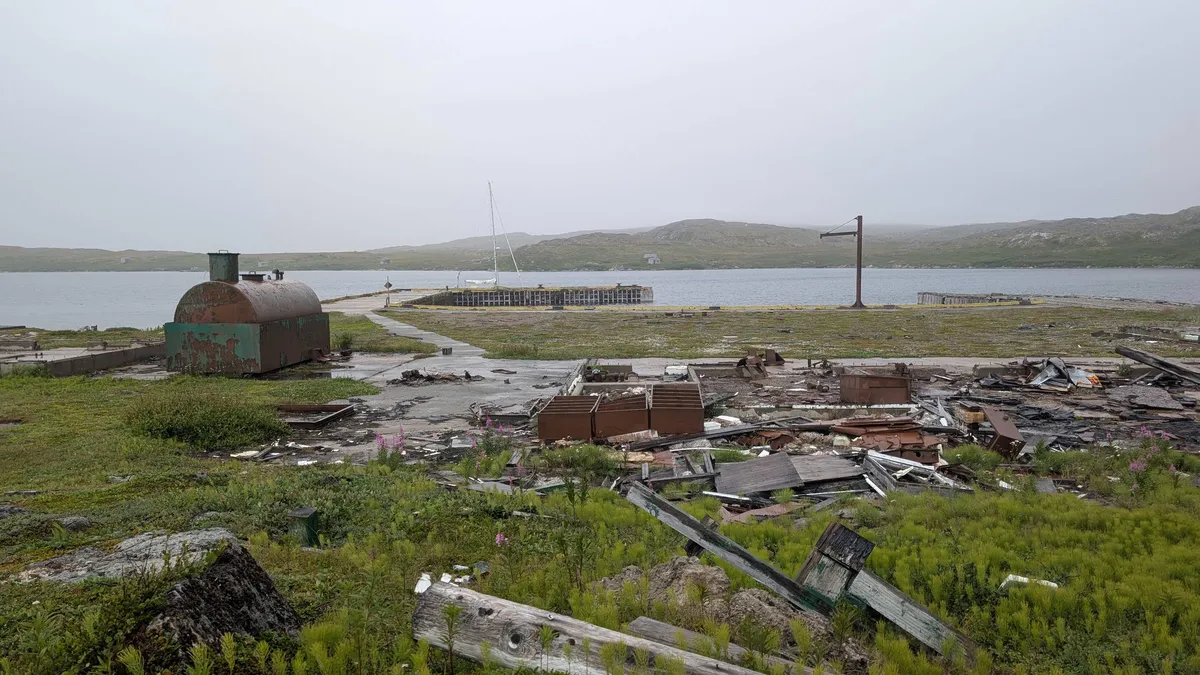
Almost everywhere, we were reminded of the cataclysm caused by the collapse of the cod population and the 1992 moratorium on commercial northern cod fishing, which cost about 30,000 jobs. In the former fishing settlement of Punch Bowl, only the quay where we moored Capsula was still standing. Battle Harbour, which was for two centuries the economic and social centre of the southeastern Labrador coast, is now an open-air museum. In Newfoundland, we passed resettled villages where only a handful of summer houses remained. We heard the story of the collapse in songs at traditional kitchen parties. In Burin, a fisherman told us how abruptly the ban had come down on them. He had bought his gear and prepared his boat for the season, only to find, between Friday and Monday, that fishing had to stop.
The waters off Newfoundland and Labrador were once among the richest cod fishing grounds in the world. Basque fishermen were already crossing the Atlantic to fish off Newfoundland in the early 1500s. By 1968, annual landings of northern cod had reached a peak of 810,000 tonnes1. The stock then plummeted and Canada imposed a moratorium in 19922. Too late. The ban remained in place for 32 years, until the commercial fishery reopened in 2024 under strict quotas, which were raised in 2025 and 2026. Some scientists think the stock has not recovered enough3.
Some fishermen turned to other species. In Cartwright, the fish plant now processes snow crabs. In Burin, the sea cucumber season was about to start when we arrived in late August. Not a local delicacy: the harbour master told us the catch is sold entirely to China.
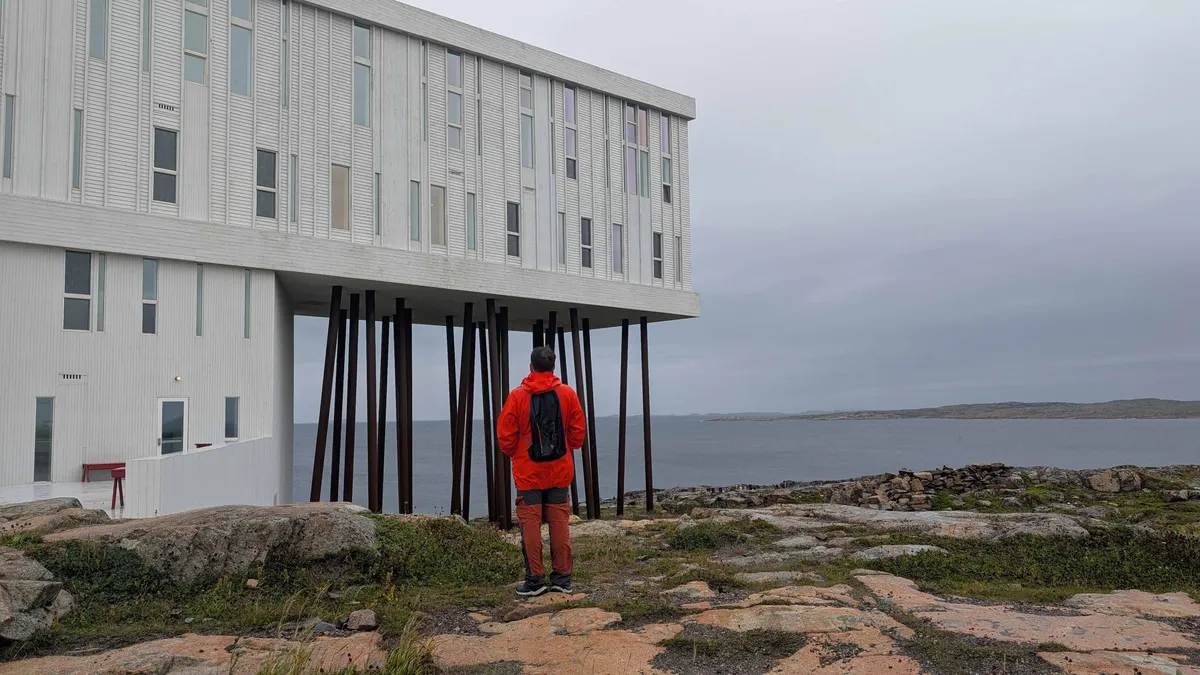
Others turned to tourism. On Fogo Island, we found a coffee shop, an ice cream parlour, a bakery, restaurants and a futuristic-looking inn. Intrigued, we learned that Zita Cobb, born on the island and later successful in high tech, had come back to put her money, energy and experience into reviving it. With two of her brothers, she founded a charity which runs community businesses like the inn and the ice cream parlour and puts their surpluses into its own programs. The inn is a bit startling, but it certainly leaves a mark on visitors, and the view from inside is stunning, even by Capsula’s standards. We liked the island without being mesmerized, yet the cruising guide lists it as a place not to be missed: whatever else the charity does, its communication works.
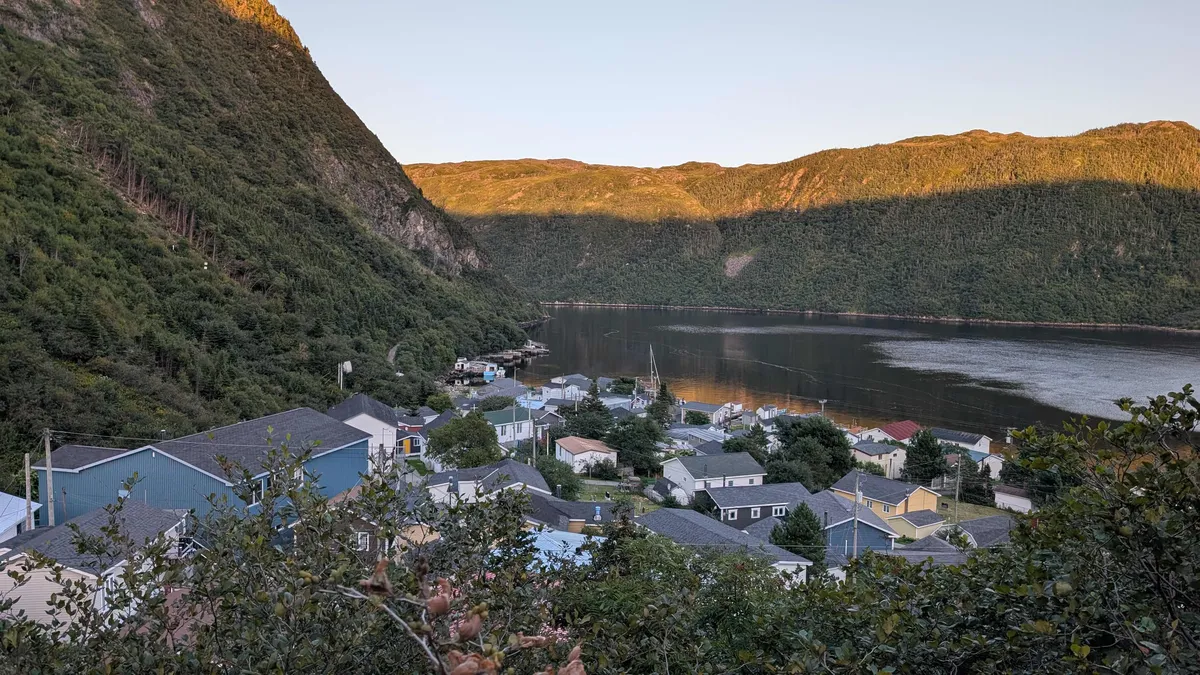
Elsewhere, in places like La Poile or Grey River, villages are slowly dying, though those who remain still oppose resettlement. As one local in Grey River told us: “What would I do in an apartment building in St. John’s? Here I have a house, I can fish and hunt”.
And collect berries.
Anne, Quebec, November 2026
⚓ Sailors' Corner
- Clearing customs. Not straightforward, as the rules are unclear.
- In theory you should arrive at a telephone reporting site or an official port of entry (rare in Labrador). Check the list here (search for reporting site).
- BUT it is mandatory that you report to the CBSA as soon as you drop anchor or even interact with a Canadian vessel. We've heard of people being fined 2000 CAD per person, just because they dropped anchor for the night after an exhausting long passage and reported only the next morning. So if you cannot reach a reporting site, just call them. Cartwright was not an official reporting site but after an hour over the phone and five hours waiting for the agents to arrive, we got cleared.
- The phone number provided by the CBSA (+1-888-226-7277) is a toll-free number, you will not be able to reach it via your European phone or even via wifi calling. Your options are (1) ask the harbour master if you are in a harbour, especially if it is a telephone reporting site or (2) call the direct landline for the CBSA +1-905-679-2073.
- It is recommended to contact the CBSA again when you cross from Newfoundland to Nova Scotia, to announce to CBSA Nova Scotia that you are there.
- Cruising guides. We used mostly Noforeignland, with some support from the Cruising Club of America cruising guide
- Harbours: not built for sailboats. But most have a public quay with solid bollards, sometimes with electricity. Often the pier is recognisable as painted in yellow. We’ve been told that it is not a rule but rather because the government is providing the yellow paint. It is still a good indicator of where to moor your boat. We were not at the peak of the fishing season though.
- Water: not always available, especially drinkable water.
- Fuel: relatively easy to find though some places require calling a fuel truck.
- Electricity: Canada’s nominal supply is 120V at 60Hz. We acquired a portable transformer. Be aware that they use multiple types of sockets in harbours. We decided to make only one connector and bet for the most common 30A 125V plug (Marinco 305CRPN), and it worked almost everywhere (except in the dry yard at Shining Waters and at one old pier in Newfoundland).
- Gas: gas bottle refilling is generally available, but they may not refill non North American bottles. At Mr Propane near Halifax, they did refill our Campingaz 907 bottles
- Showers and laundry: can be found in the fish plants next to the harbours, if you are there during the fishing season. Otherwise, they are rare..
- Shops: some villages don’t have any convenience shop, so check beforehand.
- Leaving your boat for the winter:
- We used Shining Waters marina for on shore storage and are for now very satisfied
- You can also leave your boat in the water in some marinas in Halifax
- Customs: you must declare to the CBSA that you will be leaving your boat for the winter and obtain a E29B permit. In our case, the yard handled the permit. It also allowed us to deduct taxes from services (rigging, storage etc)
- Would we do it again? Yes, and explore more Labrador
1- Schijns, Rebecca; Froese, Rainer; Hutchings, Jeffrey A.; Pauly, Daniel. “Five centuries of cod catches in Eastern Canada.” ICES Journal of Marine Science, vol. 78, no. 8, November 2021, pp. 2675-2683. https://doi.org/10.1093/icesjms/fsab153
2- Berry, David. “Cod Moratorium of 1992.” The Canadian Encyclopedia, Historica Canada, 20 October 2026. https://www.thecanadianencyclopedia.ca/en/article/cod-moratorium-of-1992
3- Oceans North. “Oceans North Remains Concerned About Increase to Northern Cod Quota.” 12 June 2026. https://oceansnorth.org/2026/06/12/northern-cod-quota-2026/